Choosing smart locks for a hotel: 7 things to check
A hotel lock is installed once and used hundreds of times a day for years. Card type, PMS integration, battery management and audit logs: the questions to ask before you request a quote, from our own projects.
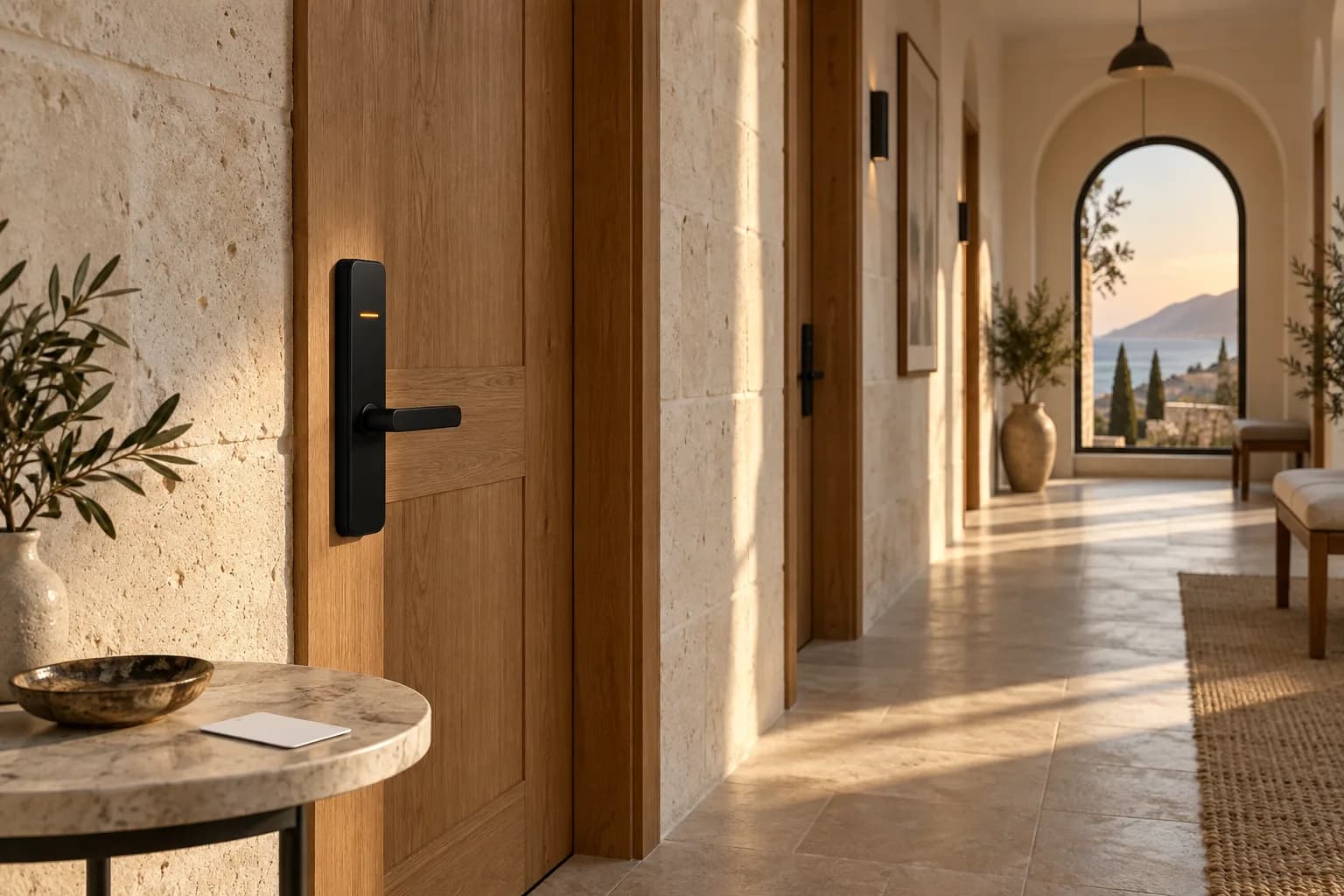
We have replaced locks in North Cyprus hotels ranging from 20 room boutique properties to 300 room beach resorts. Every project raises the same question: which system will not cause trouble in five years? These seven points make quotes much easier to compare.
1. Card technology: 13.56 MHz and encrypted cards
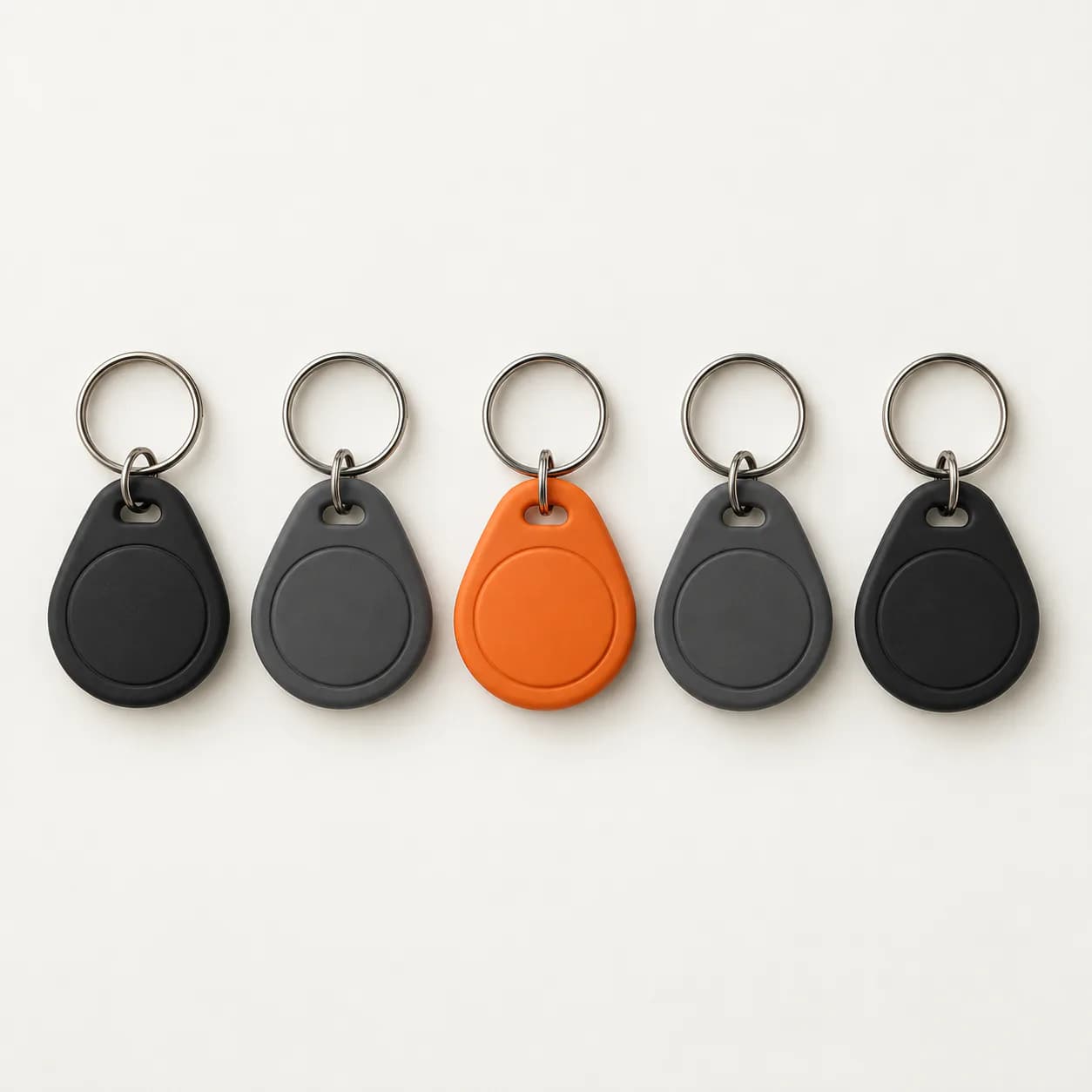
Many older hotel cards run at 125 kHz and are easy to clone. For a new installation, ask for 13.56 MHz (MIFARE class) cards and fobs. They cost a little more per card, but the risk of a cloned card opening a room drops sharply.
Decide early whether the same card should also work the lift, the car park barrier and the spa door. Adding that later always costs more than planning it now.
2. PMS integration
When reception checks a guest in, the card should be encoded automatically. Your hotel may run Elektraweb, Protel, Opera or local software. Ask the supplier:
- Which PMS does the card encoder talk to directly?
- Is there an extra licence fee for the integration?
- Can reception encode cards by hand when the PMS is down?
The last one matters most. On the busiest day of the season, a lost internet connection should not leave guests waiting at the door.
3. Battery management
A hotel lock typically runs about 12 months on 4 AA batteries. In a 200 room hotel that means around 16 locks going flat every month. Instead of waiting for surprises:
- Choose a system that shows low battery warnings in the central software.
- Replace batteries floor by floor on a schedule.
- In corridors that pass 40 degrees in summer, use lithium cells. Alkaline batteries drain faster in heat.
4. Audit logs
Every lock should record which card opened the door and when. In a lost property complaint or a dispute between staff and a guest, that log ends the argument in minutes. Ask how the log is read: live through a wireless gateway, or does someone have to walk to the door with a device?
5. Emergency exit and mechanical key
Fire regulations require a single motion exit from inside. Make sure the inside handle always opens the door. From the outside, the lock must still open with a flat battery: that is why a mechanical override key or a USB-C emergency power input matters.
6. Door and climate fit
In hotels near the sea, salty air wears down metal parts. Ask about stainless steel or zinc alloy bodies, the quality of the finish, and the protection rating for doors that face outdoors. Measure door thickness before installation too. Most locks fit doors between 40 and 90 mm, and older timber doors can hold surprises.
7. Service and spare parts
When an imported lock fails, you cannot wait weeks for a part. Get it in writing: does the supplier keep spare stock on the island, who does the installation, and how many hours until someone arrives for a fault?
Choosing a lock is really choosing a service. The best hardware is useless if the supplier cannot be reached when it breaks.
Where to start
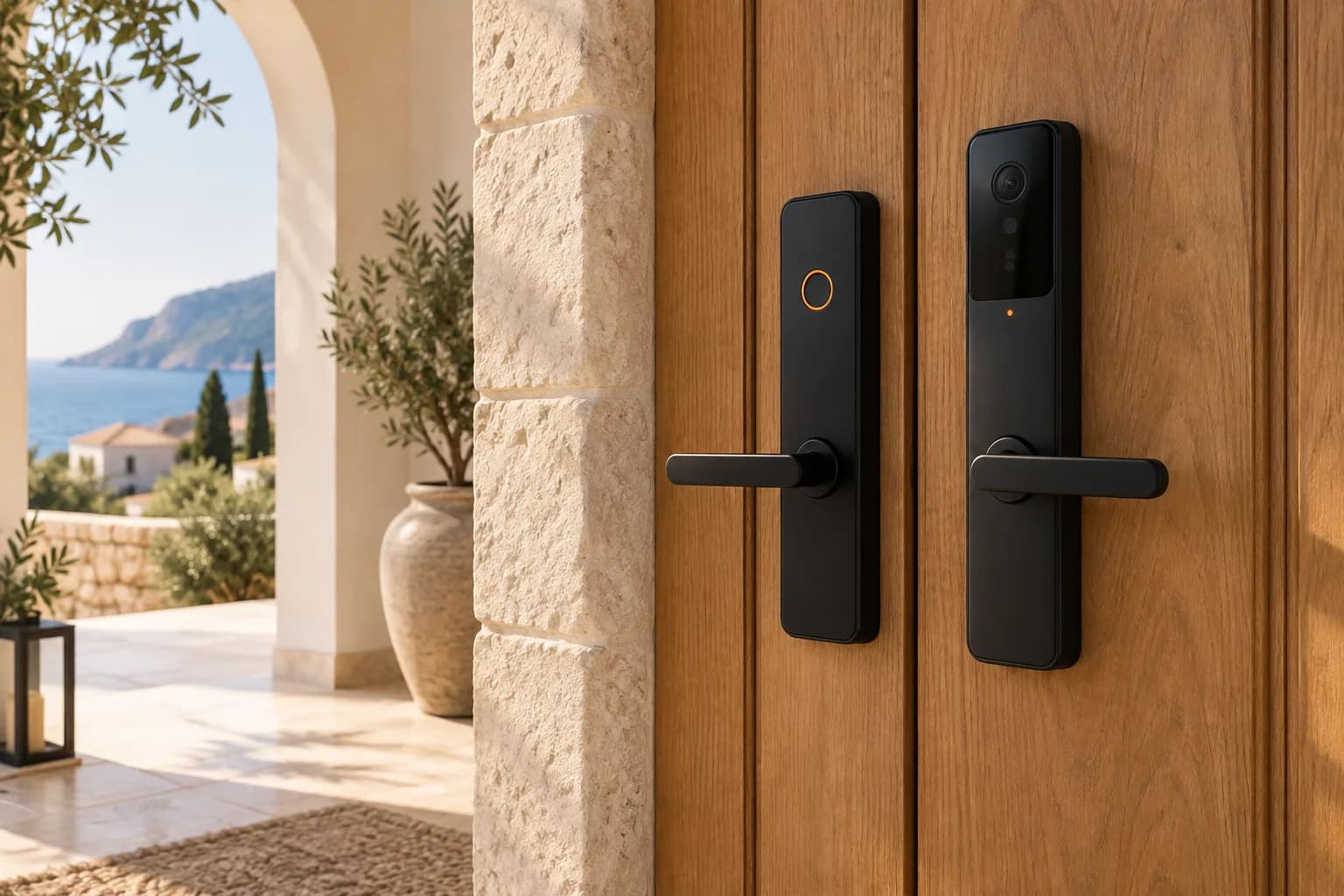
Send us your room count, door type and the PMS you use. We bring sample locks from our Famagusta warehouse and fit a trial lock in one room. We recommend letting your staff use the system for a day before you decide. The card enabled Keyva F1 with extra RFID fob sets is a good starting point for small hotels.